Healthiest Fast Food Breakfast Options: 9 Picks That Actually Keep You Full Until Lunch
Breakfast is the meal where fast food is easiest to get wrong, and easiest to get right. A pastry and a sweet coffee can be 600 calories and leave you hungry by 10 a.m. An egg white sandwich can be 300 calories and keep you full until lunch.
MacroPortal field guide · General educational information, not medical advice. Calorie, protein, sugar, and sodium figures are approximate standard servings and can change with sizes, recipes, and custom orders. The number on the restaurant's current nutrition panel always wins. If you have a medical condition, talk to a health professional before changing your diet.
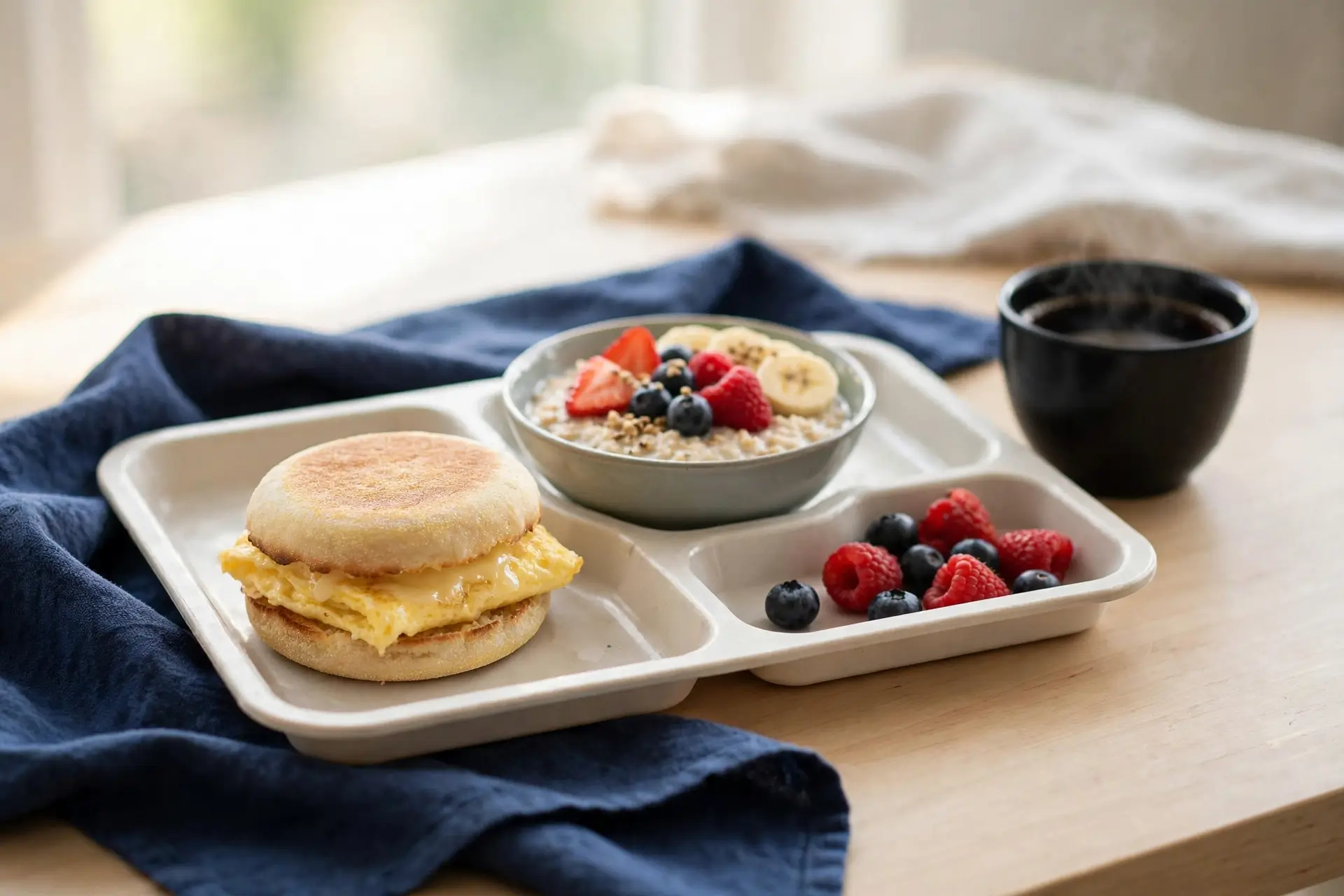
Fig. 1 — A healthy fast food breakfast in one tray: egg for protein, oatmeal and fruit for fiber, and black coffee instead of a sweet drink.
Short answer: The healthiest fast food breakfasts are the ones with real protein, some fiber, and not too much added sugar, usually around 250 to 350 calories. The strongest pick in this guide is the Chick-fil-A Egg White Grill, about 300 calories and about 26 grams of protein. Close behind are the Starbucks Spinach, Feta & Egg White Wrap, about 290 calories and about 19 grams of protein, and Starbucks Kale & Mushroom Egg Bites, about 230 calories and 15 grams of protein.
What makes a breakfast healthy is not one magic ingredient. It is the balance across four simple tests, which this guide explains first, and then applies to nine real menu items, so you can order with confidence at any drive-thru, even when the menu changes.
Most people choose breakfast in a hurry, half awake, in a drive-thru line, with a menu board full of pictures that all look good. That is exactly why breakfast needs a simple test you can run in your head, in ten seconds, before you order. Not a diet plan, not a calorie-counting app, just four questions: does it have enough protein, does it have any fiber, how much sugar is hiding in it, and how much sodium comes with it? If an item passes three of those four tests, it is usually a good breakfast. If it fails three of them, it is usually a dessert wearing a breakfast costume.
The 4 Tests Every Healthy Breakfast Has to Pass
Before the list, here is the test itself, because the test is more useful than the list. Menus change, items disappear, and new items appear. The test stays the same, and you can use it at any chain, in any country, on any morning.
Test 1: Protein — at least 15 grams, 20 to 30 grams is better
Protein is the main reason a breakfast keeps you full. It slows digestion, helps protect muscle, and reduces the 10 a.m. hunger crash that sends people back to the vending machine. A breakfast with less than 10 grams of protein, even if it is low in calories, rarely keeps you full until lunch. A breakfast with 20 grams or more usually does. That is why egg whites, grilled chicken, and Greek yogurt rank so high in this guide, and why a plain bagel, a doughnut, or hash browns rank so low. They are not bad foods on their own, they are just incomplete breakfasts, because they give you energy without giving you staying power.
For the basics behind protein and calories, see our guide to understanding calories, protein, and complex carbs. It explains why protein and carbs both give you 4 calories per gram, and fat gives you 9, which is why fried and cheesy breakfast items add up so fast, even in a small portion.
Test 2: Fiber — any fiber is a good sign
Fiber is the second test, and it is the one most fast food breakfasts fail. Fiber comes from oats, whole grains, vegetables, beans, fruit, and nuts. It adds volume, slows digestion, and helps you feel full on fewer calories. A breakfast with 3 grams of fiber or more is already ahead of most fast food mornings. A breakfast with 0 grams of fiber, like a sausage biscuit or a pastry, will usually leave you hungry again much sooner, even if it had more calories to start with. Our fiber calculator often surprises people, because a day of fast food can be high in calories and sodium, and still low in fiber at the same time.
Test 3: Sugar — watch the drink, not just the food
Sugar is the third test, and it is where breakfast is most deceptive. A sweet coffee drink, a large orange juice, or a flavored latte can add 30 to 50 grams of sugar before you have eaten a bite. That is more sugar than many breakfast sandwiches contain in total. Our hidden sugar guide explains this pattern in detail, but the short version is simple: if the food is reasonable and the drink is sweet, the meal is not reasonable any more. Black coffee, unsweetened tea, and water pass this test. A sweet drink fails it, no matter how healthy the food next to it looks.
Test 4: Sodium — the quiet test most people skip
Sodium is the fourth test, and it is the hardest one for fast food breakfast to pass. The daily value for sodium is less than 2,300 mg per day, and the ideal target many heart health groups cite is about 1,500 mg per day. A single breakfast sandwich can have 700 to 1,000 mg, which is a third to almost half of a whole day, before lunch. That does not make it a bad choice on its own, but it does mean you should keep the rest of the day lighter on salt, and drink water with the meal. Our sodium guide explains where salt hides in fast food, and why a small sandwich can have more sodium than a whole lunch at home.
Before you order, ask: protein 15 grams or more? Any fiber? Sugar under 15 grams, drink included? Sodium under 1,000 mg if you can? If you can answer yes to three of those, order it. If you can answer yes to only one, pick something else, or change one thing, like swapping a sweet drink for black coffee, or swapping a biscuit for an English muffin.
The 9 Best Picks, Side by Side
Here are the nine picks in one table, so you can compare them at a glance. All figures are approximate, for standard servings, with black coffee or water as the drink, not a sweet coffee. After the table, each pick gets its own card, with what it is, why it passes the test, and what to watch out for.
| Pick | About calories | About protein | Why it ranks here |
|---|---|---|---|
| Chick-fil-A Egg White Grill | About 300 cal | About 26 g | Highest protein in this guide |
| Starbucks Spinach, Feta & Egg White Wrap | About 290 cal | About 19 g | Protein + vegetables + whole grain |
| Panera Avocado, Egg White & Spinach Sandwich | About 350 cal | About 19 g | Most filling sandwich here |
| Starbucks Kale & Mushroom Egg Bites | About 230 cal | About 15 g | Lightest pick, low carb |
| McDonald's Egg McMuffin | About 300 cal | About 17 g | Best balance at McDonald's |
| Burger King Egg & Cheese Croissan'wich | About 320 cal | About 13 g | Simple, no sausage needed |
| Dunkin' Wake-Up Wrap, Turkey Sausage | About 240 cal | About 11 g | Smallest, quickest pick |
| Chick-fil-A Greek Yogurt Parfait | About 240 cal | About 12 g | Sweet, but with protein |
| McDonald's Fruit & Maple Oatmeal | About 320 cal | About 6 g | Best fiber pick, watch sugar |
Notice the range. The lightest picks are around 230 to 240 calories, which is perfect if you eat a bigger lunch, or if you want a snack-sized breakfast before a workout. The fuller picks are around 300 to 350 calories, which is a real breakfast on its own, and fits the roughly 375-calorie breakfast many nutrition guides cite as a typical target for adults. Both ends of the range can be healthy. The wrong choice is not a 350-calorie sandwich. It is a 350-calorie pastry with a sweet coffee that adds another 300 calories on top.
Also notice what is missing from the table: no large breakfast platter, no sausage biscuit with gravy, no doughnut, and no sweet coffee drink. Those items are not forbidden, they are just not the healthiest options, because they fail the protein test, the fiber test, and the sugar test at the same time, while adding a lot of calories and sodium.
The 9 Picks, One by One
1. Chick-fil-A Egg White Grill — about 300 cal, about 26 g protein
What it is: Grilled chicken breast, egg whites, and American cheese on a toasted multigrain English muffin.
Why it ranks first: no other pick in this guide gives you this much protein for this few calories. About 26 grams of protein in about 300 calories is a ratio you usually only see in home-cooked chicken and eggs, not in fast food. The grilled chicken, not fried chicken, is the key. It gives you protein without breading, without a lot of fat, and without a heavy sauce. The multigrain English muffin adds a little fiber, and the egg whites add protein without adding the fat of a whole egg yolk.
Watch out for: Sodium, about 950 to 990 mg, which is high, even for this list. That is the main weakness of this pick, and it is why it is better as a regular choice than as an everyday choice, especially if the rest of your day is also salty. If you want to lower it a little, ask for no extra cheese, and drink water with the meal.
2. Starbucks Spinach, Feta & Egg White Wrap — about 290 cal, about 19 g protein
What it is: Egg whites, spinach, roasted tomatoes, and feta cheese in a whole-wheat wrap.
Why it ranks high: this is the most balanced pick in the guide. It has protein from egg whites and feta, fiber from a whole-wheat wrap, and real vegetables, spinach and tomato, inside the wrap itself. At about 290 calories, it is light enough to fit almost any morning, and at about 19 grams of protein, with about 3 grams of fiber, it keeps you full much longer than a pastry of the same calories would. It is also easy to eat in the car or on a train, which is why it is so popular as a commuter breakfast.
Watch out for: The wrap is small, so very hungry people may want a piece of fruit with it, not a second wrap, and not a sweet coffee. A banana or an apple adds fiber and volume for about 100 calories, which is a much better second item than another sandwich.
3. Panera Avocado, Egg White & Spinach Sandwich — about 350 cal, about 19 g protein
What it is: Egg whites, avocado, spinach, and cheese on a whole-grain bread or roll.
Why it ranks high: this is the most filling sandwich in the guide, because avocado adds healthy fats and fiber, spinach adds volume, and egg whites add protein. At about 350 calories and about 19 grams of protein, it is a complete breakfast on its own, not a snack. It is the pick to choose when you know lunch will be late, or when you have a long morning ahead and you do not want to be hungry by 10 a.m.
Watch out for: Avocado adds calories, so this sandwich is heavier than the Starbucks wrap, even though it is healthier in many ways. That is fine, as long as you count it as your breakfast, not as a light snack plus a pastry on the side.
4. Starbucks Kale & Mushroom Egg Bites — about 230 cal, about 15 g protein
What it is: Small, baked egg white bites with kale and mushroom, served in a cup.
Why it ranks high: this is the lightest pick in the guide, and the lowest in carbs, at about 11 grams of carbs. At about 230 calories and 15 grams of protein, it is perfect for a light morning, for a pre-workout breakfast, or for anyone who does not like a big sandwich in the morning. The kale and mushroom add vegetables and flavor without adding calories, and the egg white base keeps the fat lower than a whole-egg bite would.
Watch out for: It is small, so if you are very hungry, pair it with fruit, not with a pastry. A piece of fruit adds fiber and natural sweetness, while a pastry adds sugar and calories without adding protein.
5. McDonald's Egg McMuffin — about 300 cal, about 17 g protein
What it is: A real egg, Canadian bacon, and American cheese on a toasted English muffin.
Why it ranks high: the Egg McMuffin is the classic healthy fast food breakfast, and it still holds up. At about 300 calories and 17 grams of protein, it is balanced, simple, and widely available. The egg is real, the Canadian bacon is leaner than sausage, and the English muffin is a better base than a biscuit or a croissant, because it is lower in fat and sugar. For a full breakdown of the bigger burgers at the same chain, see our Big Mac calories and macros guide, which shows why a simple sandwich beats a loaded one.
Watch out for: Sodium, about 770 mg, and saturated fat, about 4.5 to 6 grams. Both are the price of cheese and Canadian bacon. You can lower both a little by asking for no cheese, which brings the sandwich down to about 250 calories and about 14 grams of protein, but most people will be fine keeping the cheese and keeping the rest of the day lighter on salt.
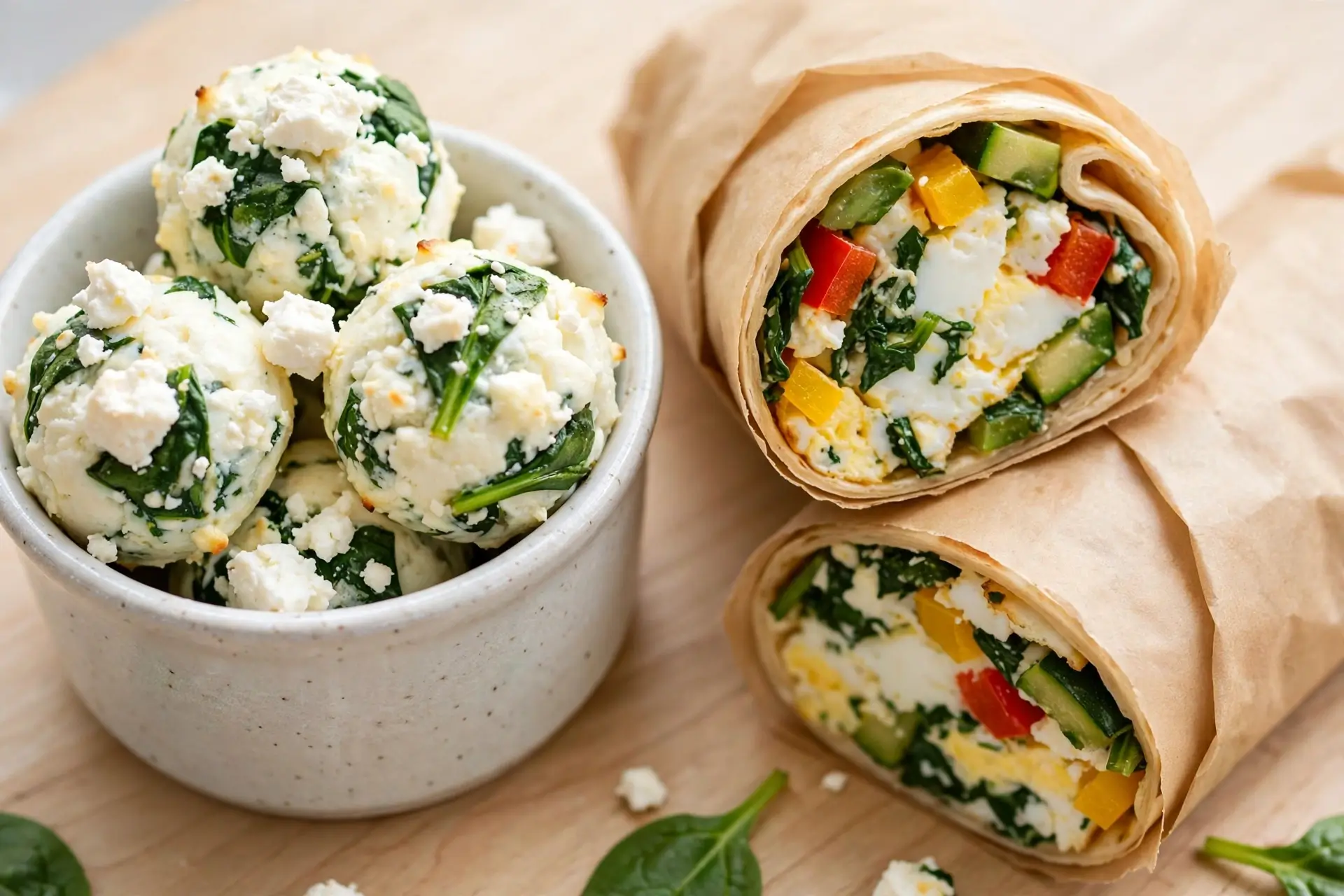
Fig. 2 — The Starbucks lane: egg white bites and an egg white wrap, protein first, vegetables inside, no pastry, no sweet drink.
The Other 4 Picks: Light, Sweet, and Fiber-First
6. Burger King Egg & Cheese Croissan'wich — about 320 cal, about 13 g protein
What it is: Egg and cheese on a croissant, with no sausage, no bacon, and no extra meat.
Why it makes the list: this is the simplest version of a croissant sandwich, and simplicity is the point. Without sausage, it stays at about 320 calories and about 13 grams of protein, which is a reasonable breakfast, especially if you are in a hurry and Burger King is the only option nearby. The croissant adds butter and fat, so it is not as light as an English muffin, but it is still much better than a sausage version of the same sandwich, which adds fat, sodium, and calories without adding much protein.
Watch out for: Do not add sausage, bacon, or a second cheese slice. Each addition pushes the sandwich up in calories and sodium, while the protein gain is small. If you want more protein, add a second egg, not more meat.
7. Dunkin' Wake-Up Wrap, Turkey Sausage — about 240 cal, about 11 g protein
What it is: A small flour tortilla wrap with egg, cheese, and turkey sausage.
Why it makes the list: this is the smallest, quickest pick in the guide, at about 240 calories and about 11 grams of protein. It is not the highest in protein, and it has almost no fiber, but it is much better than a doughnut, which has almost no protein at all, and much better than a large bagel with cream cheese, which can be 400 calories or more with very little protein. The turkey sausage version is the key choice here, because pork sausage and bacon add much more fat and sodium for the same size.
Watch out for: It is small, so it works best as a light breakfast, or as part of a breakfast with fruit. Do not order two wraps and a sweet coffee and call it a light breakfast, because that is a full, high-sugar meal in disguise.
8. Chick-fil-A Greek Yogurt Parfait — about 240 cal, about 12 g protein
What it is: Vanilla Greek yogurt with fresh berries, served with granola or cookie crumbs.
Why it makes the list: this is the sweet pick that still passes the protein test, at about 240 calories and about 12 grams of protein. Greek yogurt gives you protein and calcium, berries give you fiber and antioxidants, and the whole thing feels like a treat, not like a diet food. That matters, because a healthy breakfast you actually enjoy is one you will order again.
Watch out for: Sugar, about 25 grams, mostly from the yogurt, the berries, and the topping. That is high for a breakfast item, even if some of it is natural sugar from milk and fruit. Choose the cookie crumbs version, which is surprisingly lower in calories than the granola version in some listings, or ask for the topping on the side and use only half of it. Do not pair a parfait with a sweet coffee, or you will have two sweet items in one meal.
9. McDonald's Fruit & Maple Oatmeal — about 320 cal, about 6 g protein, about 4 g fiber
What it is: Whole-grain oats cooked with brown sugar, topped with diced apples, cranberries, and raisins.
Why it makes the list: this is the best fiber pick in the guide, at about 4 grams of fiber, and the lowest in sodium, at about 150 mg, which is very low for fast food. Oats are filling, they digest slowly, and they give you steady energy, unlike a pastry, which gives you a quick sugar rush and then a crash. If you want a warm, comforting breakfast that is not a sandwich, this is the one to choose.
Watch out for: Sugar, about 31 grams, and protein, only about 6 grams. That is the trade-off. Oatmeal on its own is not a high-protein breakfast, so it works best when you pair it with a protein item, like an egg, or when you choose a plain oatmeal with fruit and nuts, if it is available, instead of a sweetened version on its own. Our high-protein fast food options under 500 calories guide explains why protein matters so much for staying full, and it applies just as much to breakfast as it does to lunch.
The Drink Trap: How Coffee Turns a Healthy Breakfast Into a Dessert
The food is only half of breakfast. The drink is the other half, and at fast food chains, the drink is where most healthy breakfasts go wrong. A black coffee has about 0 to 5 calories. A large flavored latte, a sweet iced coffee, or a large orange juice can have 200 to 400 calories and 30 to 50 grams of sugar. That is more than the food itself, and it is the reason a 300-calorie sandwich can turn into a 600-calorie breakfast without you noticing.
Here is a simple drink ranking, from best to worst, for a fast food breakfast. Best: black coffee, unsweetened tea, and water, all about 0 calories and 0 grams of sugar. Good: coffee with a small amount of plain milk, or unsweetened tea with lemon. Okay, sometimes: a small latte with plain milk and no syrup, or a small orange juice, if you really want it, but count it as part of the meal, not as a free extra. Worst: a large sweet coffee, a flavored latte with syrup, a sweet tea, a soda, or a large juice, all of which can add more sugar than a doughnut.
Our MacroPortal homepage calculators can help you plan the rest of the day around a breakfast drink, and our water intake calculator is a simple reminder that water with breakfast costs 0 calories and still helps you feel full. If you are used to a sweet coffee every morning, try this swap for one week: same coffee, same size, but no syrup, and a small amount of plain milk instead. Most people find they get used to it in two or three days, and they save hundreds of calories a week without feeling like they gave anything up.
The breakfast drink test: If you cannot see the calories and sugar on the drink menu, ask, or check the app before you order. A drink with more than 15 grams of sugar is a dessert drink, not a breakfast drink, even if it has coffee in it. Order the food you want, and order the drink separately, in your head, as if it were a second food item, because that is what it is.
The 4 breakfast traps to avoid
- The big platter: A breakfast platter with eggs, sausage, bacon, pancakes, hash browns, and a biscuit can be 700 to 1,000 calories or more, with very little fiber, and a lot of sodium. It is a weekend treat, not a weekday breakfast, and it will usually leave you sleepy by mid-morning, not energized.
- The sausage biscuit: A sausage biscuit is mostly fat and refined carbs, with very little protein for its calories, and a lot of sodium. Swapping the biscuit for an English muffin, and the sausage for Canadian bacon or grilled chicken, is one of the biggest upgrades you can make at any chain.
- The pastry plus sweet coffee: A doughnut or a pastry with a sweet coffee is sugar plus sugar, with almost no protein and almost no fiber. It will give you energy for about an hour, and then leave you hungrier than before you ate. If you want a pastry, have it as a separate treat, not as breakfast.
- The hash browns as a side: Hash browns are fried potatoes, with fat and sodium, and almost no protein or fiber. They are not a vegetable side, even though they come from a potato. If you want a side with breakfast, choose fruit, yogurt, or oatmeal instead, or skip the side and keep the sandwich on its own.
Build Your Own Healthy Breakfast, at Any Chain
You do not need to memorize the nine picks in this guide. You just need to know how to build a breakfast that passes the four tests, at any chain, on any morning. Here is the build, in five steps, in the order you should think about it at the counter.
- Start with egg, not pastry. Egg, egg white, or grilled chicken is the protein anchor. If the menu has an egg white option, choose it. If it has a grilled chicken breakfast sandwich, choose it. If it has only fried chicken, ask if a grilled version is available, or choose a smaller fried item and add fruit.
- Choose the lightest bread. English muffin first, then whole-wheat wrap, then whole-grain bread. Biscuit and croissant are last, because they add butter, fat, and calories without adding protein or fiber. If you can, ask for the sandwich open-faced, or with one slice of bread removed, and you will save calories without losing the protein.
- Add a vegetable or fruit, not a fried side. Spinach, tomato, avocado, fruit, or oatmeal are all better sides than hash browns or a pastry. They add fiber, volume, and vitamins, for far fewer calories than a fried side.
- Keep cheese to one slice. Cheese adds protein and calcium, but it also adds saturated fat and sodium. One slice is enough for flavor. Two slices, plus bacon, plus a creamy sauce, is where a light sandwich turns into a heavy one.
- Order black coffee or water. This is the easiest swap in the whole guide, and it saves the most calories and sugar. If you want milk, ask for a small amount of plain milk, not a sweet syrup, and not a large flavored latte.
For protein ideas beyond breakfast, see our chicken breast nutrition calculator and chicken thigh nutrition calculator, which show why grilled chicken is such a reliable protein anchor, at home and at a restaurant. And for a day when lunch is pizza, not breakfast, the pizza calorie calculator helps you plan the rest of the day around a heavier meal, instead of guessing.
Fast food breakfast is not the healthiest breakfast in the world, and this guide does not claim otherwise. A home breakfast with eggs, oats, fruit, and yogurt will usually beat any drive-thru breakfast on sodium, sugar, and fiber. But most people do not eat breakfast at home every day, because they are busy, tired, or travelling. A 300-calorie egg white sandwich with black coffee, eaten on a busy morning, beats a skipped breakfast that leads to a 1,000-calorie lunch, every time. The goal is not perfection. The goal is a breakfast that keeps you full, fits your day, and does not quietly turn into dessert.
Start with one pick from this guide, the one that sounds most like food you actually like. Egg White Grill if you love chicken. Spinach wrap if you love wraps. Egg McMuffin if you love McDonald's. Order it exactly as written, with black coffee or water, and see how you feel at 11 a.m. If you are full, you have found your fast food breakfast. If you are still hungry, add fruit next time, not a pastry or a sweet coffee. That is the whole morning test, and it fits in your pocket.
Your Next Breakfast: The 5-Step Morning Checklist
- Protein first: 15 grams or more, egg, egg white, grilled chicken, or Greek yogurt.
- Fiber second: Any fiber is a good sign, oats, whole grains, vegetables, or fruit.
- Sugar third: Under 15 grams, drink included, black coffee or water, not a sweet drink.
- Sodium fourth: Under 1,000 mg if you can, and lighter on salt for the rest of the day.
- Check before you pay: Food plus drink, in the app, before you order, not after.
Fast Food Breakfast, Answered
What is the healthiest fast food breakfast?
A breakfast with at least 15 grams of protein, some fiber, and not too much added sugar, usually around 250 to 350 calories. The Chick-fil-A Egg White Grill, about 300 calories and about 26 grams of protein, and the Starbucks Spinach, Feta & Egg White Wrap, about 290 calories and about 19 grams of protein, are two of the strongest examples in this guide.
Is an Egg McMuffin healthy?
For a fast food sandwich, yes, it is a reasonable choice. It has about 300 calories and 17 grams of protein, with a real egg and lean Canadian bacon. Its weak point is sodium, about 770 mg, which is over a third of the 2,300 mg daily value, so it is better as a regular choice than as an everyday one.
What should I drink with a fast food breakfast?
Black coffee, unsweetened tea, or water. A sweet coffee drink, orange juice, or soda can add more sugar and calories than the food itself. If you want milk in your coffee, ask for a small amount of plain milk instead of a sweet syrup or a large flavored latte.
Is oatmeal a good fast food breakfast?
It can be, for fiber and fullness, but check the sugar. McDonald's Fruit & Maple Oatmeal has about 320 calories, 4 grams of fiber, and 6 grams of protein, but also about 31 grams of sugar. Pair it with a protein item, or choose a plain oatmeal with fruit and nuts when it is available, instead of a sweetened version on its own.
Can I eat fast food breakfast every day?
You can, but it is harder to keep sodium and added sugar low if you do. Most fast food breakfasts in this guide have 500 to 1,000 mg of sodium, which adds up fast across a day. Mix in home breakfasts during the week, save the highest-sodium picks for occasional days, and drink water with the meal.
How much protein should breakfast have?
Aim for at least 15 grams, and 20 to 30 grams is even better for staying full until lunch. That is why egg white, grilled chicken, and Greek yogurt items rank highest in this guide, while pastries, hash browns, and sweet drinks rank lowest, because they add calories without adding protein.
How these numbers were checked: Pick totals are sums of standard published servings, shown as approximate because sizes, recipes, and custom orders change. Chick-fil-A Egg White Grill about 300 calories and about 26 grams of protein; Starbucks Spinach, Feta & Egg White Wrap about 290 calories and about 19 grams of protein; Starbucks Kale & Mushroom Egg Bites about 230 calories and 15 grams of protein; McDonald's Egg McMuffin about 300 calories and 17 grams of protein, about 770 mg sodium; McDonald's Fruit & Maple Oatmeal about 320 calories, 6 grams of protein, 4 grams of fiber, about 31 grams of sugar; Chick-fil-A Greek Yogurt Parfait about 240 calories and 12 grams of protein. Check the restaurant's current nutrition page or app for your exact order, because that number always wins over any guide, including this one.
This article is general educational information, not medical advice, and does not promise any health outcome. If you have diabetes, heart disease, kidney disease, or any other medical condition, or you are pregnant, talk to a health professional before changing your diet.