How Many Calories Are in a Big Mac? (Full Macros + Meal Breakdown)
Last updated: September 2026 · Based on current US McDonald's nutrition data
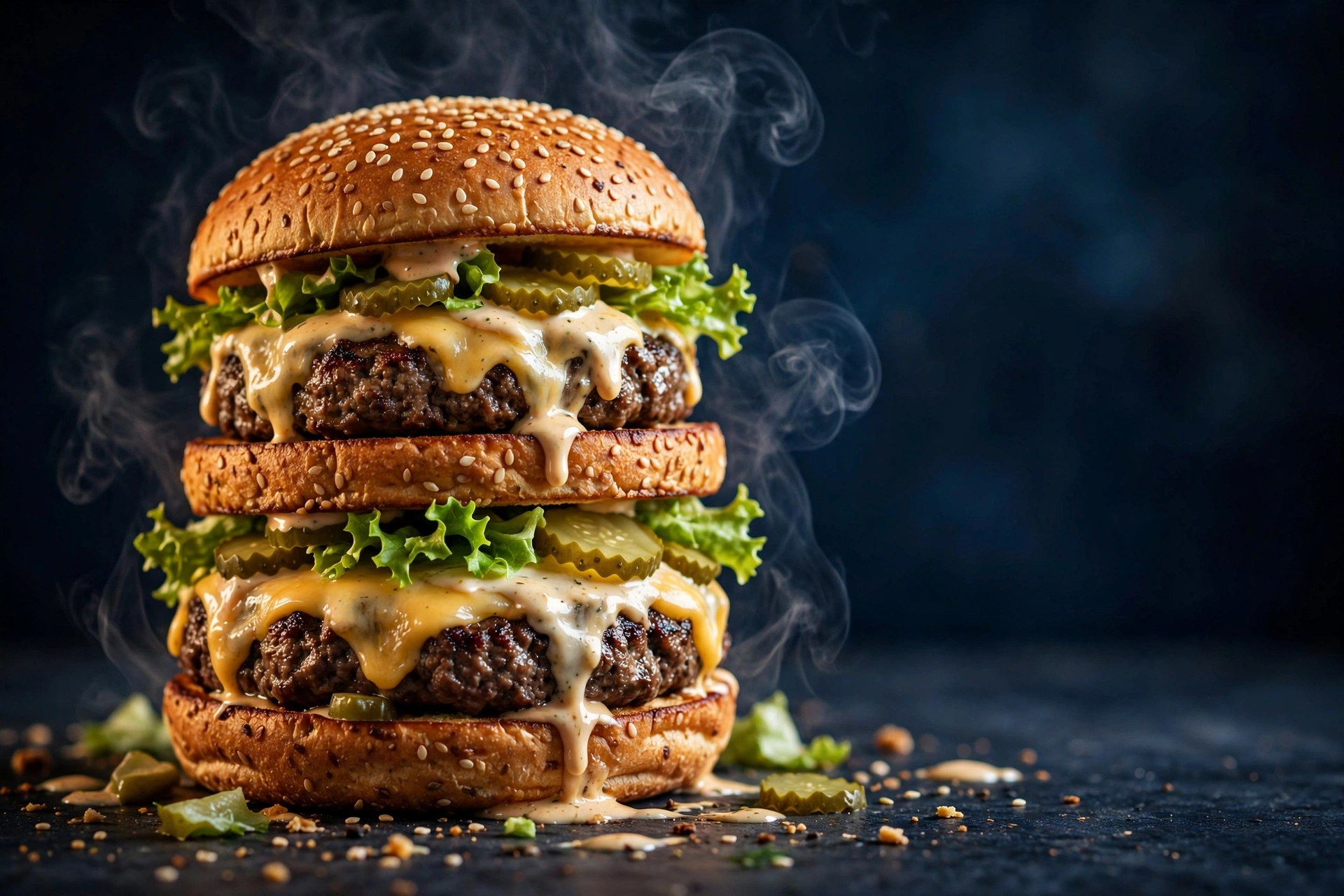
That's the straight answer: one Big Mac from McDonald's contains 590 calories, based on current US nutrition data. But the number alone doesn't tell you much — so let's break down exactly where those 590 calories come from, what the full macros look like, and what happens when fries and a drink join the party.
The Big Mac has been the face of McDonald's since 1967, and it's probably the most-searched fast food item on the planet when it comes to nutrition. Interestingly, that 590 number is higher than the 540 calories the same burger carried for years — McDonald's updated its recipes and nutrition figures, and the Big Mac quietly gained about 50 calories along the way. If an old blog post told you 540, it wasn't lying; the burger just changed.
Below is the full picture: a component-by-component dissection, the complete nutrition label, meal totals for every size, how it stacks up against its rivals, and — the part most articles skip — how to actually fit one into a normal day of eating.
Where the 590 Calories Actually Hide
McDonald's only publishes nutrition for the whole burger, not for each layer. But by cross-referencing standard ingredient values, we can estimate what each part contributes. Think of this as an autopsy of the burger, layer by layer:
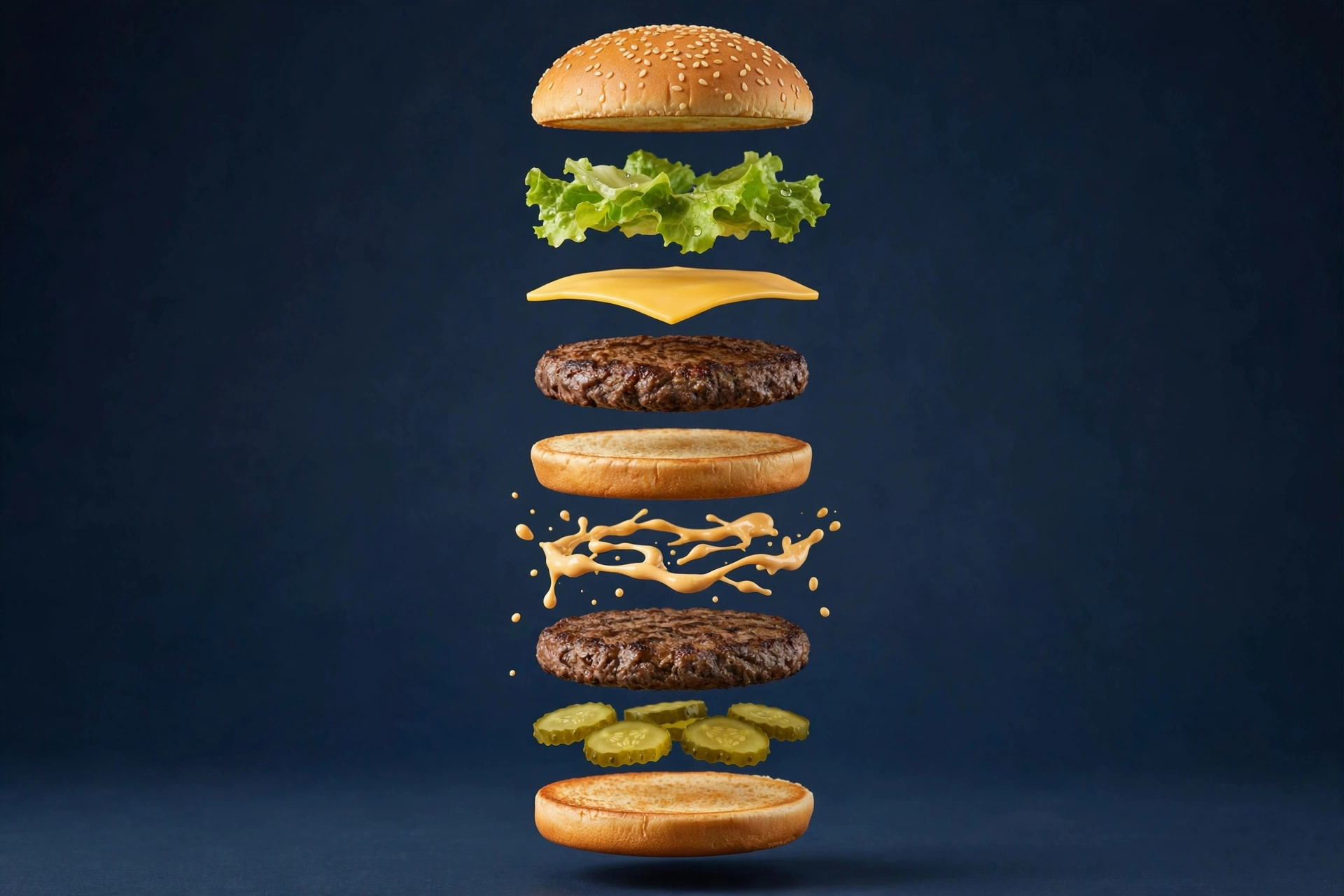
| Component | Est. Calories | What it brings |
|---|---|---|
| Sesame bun (3 pieces, incl. middle "club" layer) | ~240 | About 40% of the burger's calories live in the bread alone — it's the single biggest contributor. |
| Two 100% beef patties | ~200 | Roughly 100 calories each; also the source of most of the protein and saturated fat. |
| Big Mac sauce | ~90 | The famous secret sauce is essentially a sweet mayo — small serving, real calorie cost. |
| American cheese slice | ~50 | One slice adds 50 calories and a chunk of the sodium. |
| Lettuce, onions, pickles | ~10 | Practically free. The crunch is the healthiest part of the whole operation. |
| Total | ~590 | Matches the official figure. |
The takeaway is worth remembering: the bun is the calorie heavyweight, not the beef. Two small patties plus sauce, cheese and three pieces of bread add up fast. This matters because it tells you exactly where to cut if you want a lighter Big Mac — and we'll get to that.
Big Mac Full Nutrition Facts
Here is the complete official nutrition profile for one Big Mac (about 219g), with percent daily values based on a 2,000-calorie diet:
| Nutrient | Amount | % Daily Value |
|---|---|---|
| Calories | 590 | — |
| Total fat | 34g | 44% |
| Saturated fat | 11g | 55% |
| Trans fat | 1g | — |
| Cholesterol | 85mg | 28% |
| Sodium | 1,050mg | 46% |
| Total carbohydrates | 46g | 17% |
| Dietary fiber | 3g | 11% |
| Total sugars | 9g | — |
| Protein | 25g | 50% |
Three things jump out. First, the protein is genuinely respectable — 25 grams is half a day's worth and roughly what you'd get from a chicken breast. For a burger with a junk-food reputation, the protein-to-calorie ratio isn't terrible. Second, the sodium is the real problem: 1,050mg is nearly half your entire day's recommended limit in one sandwich, before a single salty fry. Third, 11 grams of saturated fat is more than half the daily cap — that's the cheese, the beef and the sauce combining forces.
In calorie-share terms, about 52% of the Big Mac's energy comes from fat, 31% from carbs and 17% from protein. It's an energy-dense, fat-forward burger — but not the protein-free disaster some people assume.
How Long Does It Take to Burn Off a Big Mac?
Calories feel abstract until you translate them into movement. For an average adult, here is roughly how much activity it takes to work off those 590 calories:
| Activity | Approx. time to burn 590 calories |
|---|---|
| Running (moderate pace) | ~50 minutes |
| Cycling (moderate effort) | ~55 minutes |
| Swimming (steady laps) | ~60 minutes |
| Brisk walking | ~2 hours |
| Casual walking | ~3 hours |
These are rough estimates — your weight, pace and metabolism all shift the numbers — but they make the point vividly: the burger is about an hour of real exercise. The medium meal at 1,110 calories is closer to two hours. Nobody is suggesting you "earn" your food through exercise, but this framing helps explain why the meal version is a fundamentally different commitment than the burger alone.
The Big Mac Isn't the Same Everywhere
Here's a detail most nutrition articles miss: the Big Mac's calories change by country, because recipes are localized. The US version sits at 590, but elsewhere the same iconic burger can be noticeably lighter:
Big Mac calories around the world (approximate)
United States: 590 | United Kingdom: ~508 | Japan: ~557 | Canada: ~590 | Australia: ~559
Differences come from bun recipes, sauce formulations, patty sizes and local regulations — the UK's version is the lightest of the bunch while the US sits at the higher end. If you're reading this outside the US, check your country's McDonald's nutrition page, because the 590 figure is specifically American.
This also explains why you'll find conflicting numbers online. A British blog saying 508 and an American one saying 590 are both correct — they're just describing different burgers. When comparing or tracking, always match the data to your country.
The Meal Breakdown: Burger Alone vs. Small, Medium and Large Meals
Almost nobody eats a Big Mac by itself. The moment fries and a drink enter the picture, the math changes dramatically — the sides can easily double the meal. Here's how the classic Big Mac combo adds up at each size (with Coca-Cola as the drink):
| Meal | What's in it | Calories | Fat | Carbs | Protein |
|---|---|---|---|---|---|
| Big Mac alone | Just the burger | 590 | 34g | 46g | 25g |
| Small meal | + small fries (220) + small Coke (150) | 960 | 45g | 116g | 29g |
| Medium meal | + medium fries (320) + medium Coke (200) | 1,110 | 55g | 149g | 29g |
| Large meal | + large fries (480) + large Coke (290) | 1,360 | 68g | 189g | 33g |
Look at what just happened: the burger is 590 calories, but the medium meal is 1,110 — the fries and soda contribute 520 calories, nearly as much as the burger itself. And the large meal at 1,360 calories is more than two-thirds of a full day's food for many people, with sodium climbing past 1,500mg once the salted fries are counted.
Notice something else: protein barely moves. You go from 25g in the burger to 29g in the medium meal — the extra 520 calories buy you almost no additional protein, just fat and fast carbs. That's the signature of a combo meal: the sides add energy without adding nutrition.
Build your own meal
Want to mix and match? Use our McDonald's nutrition calculator to build any burger, fries and drink combo and see the full calories and macros instantly.
Big Mac vs. The Rivals
How does the Big Mac stack up against the other giants of the drive-thru? Here's the head-to-head on the flagship burgers (US figures, approximate — menus and recipes change):
| Burger | Calories | Fat | Protein | Sodium |
|---|---|---|---|---|
| McDonald's Big Mac | 590 | 34g | 25g | 1,050mg |
| Burger King Whopper | 670 | 40g | 31g | 910mg |
| Wendy's Dave's Single | 590 | 37g | 29g | 1,210mg |
The Big Mac actually comes out looking reasonable here. It's 80 calories lighter than the Whopper despite its richer reputation, and it matches the Dave's Single on calories while carrying less sodium than Wendy's entry. The Whopper gives you more protein (31g) but also more fat; the Dave's Single matches the Big Mac's calories but is the saltiest of the three at 1,210mg.
The honest conclusion: among flagship burgers, the Big Mac is middle of the pack — not the lightest, not the heaviest. Its reputation as the ultimate junk burger is more about cultural icon status than nutritional reality.
Can You Fit a Big Mac Into a Normal Day of Eating?
This is the question nobody asks but everybody should. Knowing a burger has 590 calories is trivia; knowing whether it fits your day is useful. So let's build a realistic 2,000-calorie day with a Big Mac sitting right in the middle of it:
| Meal | What | Calories | Protein |
|---|---|---|---|
| Breakfast | Oatmeal with banana and a spoon of peanut butter | 380 | 12g |
| Lunch | Big Mac (with water or Diet Coke) | 590 | 25g |
| Afternoon snack | Greek yogurt with berries | 220 | 18g |
| Dinner | Grilled chicken breast, rice, mixed vegetables | 620 | 48g |
| Day total | — | 1,810 | 103g |
It fits — comfortably. At 1,810 calories with 103 grams of protein, this day leaves room for a small evening snack and still lands under 2,000. The Big Mac didn't wreck anything, because the rest of the day was built around lean protein, fiber and whole foods.
That's the real lesson of fast food nutrition: no single meal determines your diet; the pattern does. A Big Mac eaten inside a day of otherwise solid meals is just lunch. A Big Mac meal supersized, plus a milkshake, plus a sedentary day — that's a different story. The burger is the same; the context is everything.
Two guardrails if you do this regularly: watch the sodium (the Big Mac alone is 46% of your daily limit, so keep dinner light on salt), and don't make the fries-and-soda combo a daily habit — the burger fits; the 1,110-calorie medium meal, every day, does not.
5 Ordering Tweaks That Cut Big Mac Calories
Want the Big Mac experience with less of the Big Mac math? Each of these is a real customization you can order, with the approximate saving:
Stack all five and a medium meal drops from roughly 1,110 calories to around 500 — less than the original burger alone. You don't need all five; even one or two make the meal meaningfully lighter.
Big Mac Calories: Frequently Asked Questions
A Big Mac contains 590 calories, with 34g fat, 46g carbs and 25g protein. This is the current US figure — older sources listing 540 calories reflect the previous recipe.
It depends on the size: a small Big Mac meal is about 960 calories, a medium is about 1,110 calories and a large is about 1,360 calories (with Coca-Cola). The fries and drink add 370–770 calories on top of the 590-calorie burger.
A Big Mac has 25 grams of protein — about 50% of the daily value. Most of it comes from the two beef patties, with smaller contributions from the cheese and bun.
It's a mixed bag. The 25g of protein is a genuine plus, but 34g of fat, 11g of saturated fat and 1,050mg of sodium (46% of your daily limit) are significant downsides. As an occasional meal inside an otherwise balanced day, it fits fine; as a daily habit, the sodium and saturated fat add up.
Removing the Big Mac sauce saves roughly 90 calories, bringing the burger down to about 500 calories. Removing the cheese as well saves another ~50, for a total of roughly 450 calories.
The Whopper has more: about 670 calories versus the Big Mac's 590. The Whopper also delivers more protein (31g vs 25g) but more fat (40g vs 34g). The Big Mac is the lighter of the two flagship burgers.
The Bottom Line
A Big Mac is 590 calories — less than its reputation suggests, more than its old 540-calorie figure, and right in the middle of the flagship-burger pack. The burger itself is defensible: 25 grams of protein, honest beef, and vegetables that contribute almost nothing calorically. What sinks the meal isn't the burger — it's the 520-calorie entourage of medium fries and soda that shows up with it.
So the next time someone asks how many calories are in a Big Mac, give them the real answer: 590 for the burger, 1,110 for the medium meal, and the difference is entirely your choice.