Pizza Price Calculator: How Much Should Pizza Really Cost?
How pizza prices really work, the one number that reveals true value, real questions solved, and homemade versus ordered costs.
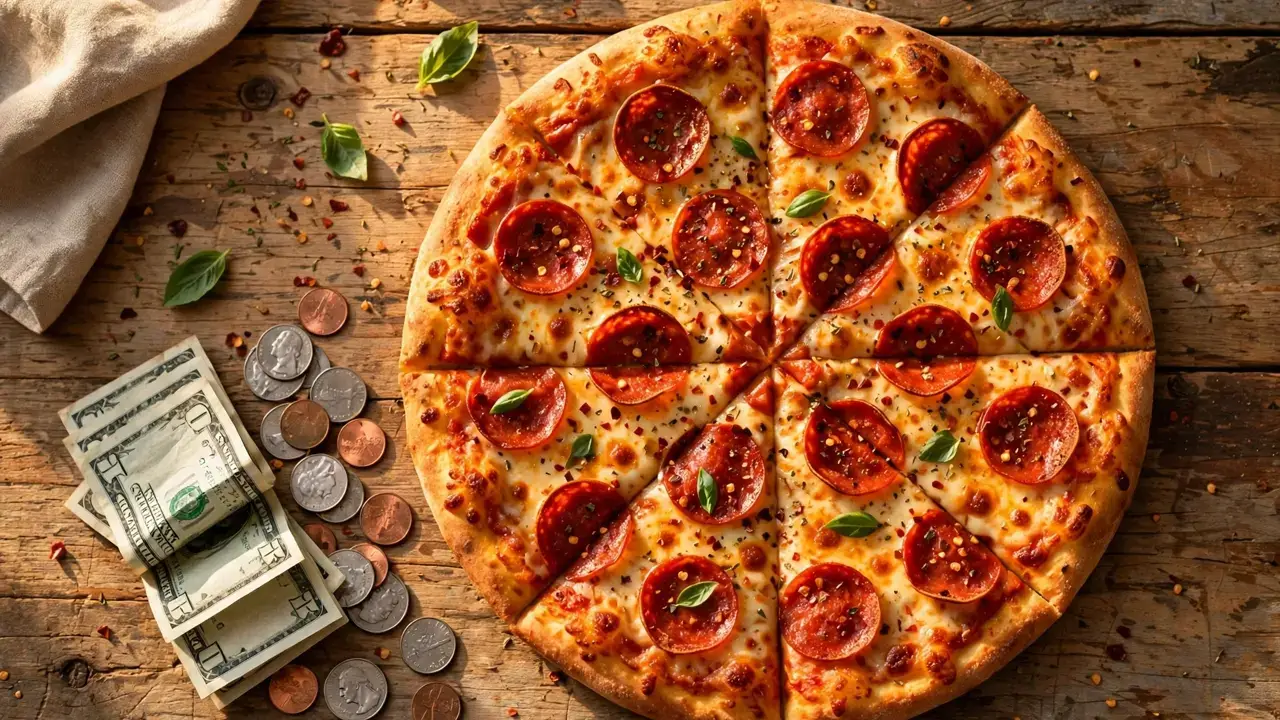
Same pizza, different shops, wildly different prices. Here is how to tell what it should really cost.
A large pepperoni pizza costs $12 at one shop and $22 at another, three blocks away. Same size, same topping, nearly double the price. Are you getting ripped off, or is the expensive one actually the better deal? Most people have no idea, because pizza pricing feels completely random.
This guide breaks down how pizza prices really work. You will learn the one number that reveals true value, see typical prices for every size, get real price questions solved step by step, and find out whether making pizza at home actually saves money. Everything below uses typical United States prices, and our free pizza price calculator at the end runs the numbers for your exact order.
Most people never question a pizza bill. The total appears, they pay it, and the moment passes. But over a year, a household that orders pizza twice a month can spend $600 to $800 without ever asking whether a better deal was one tap away. Ten minutes of understanding how pizza is priced can save you real money every single month.
Why Pizza Prices Vary So Much
The same pizza can cost wildly different amounts for reasons that have nothing to do with taste. Location is the biggest factor. A shop in Manhattan pays many times the rent of a shop in a small town, and that shows up in every box. Labor, cheese prices and delivery app commissions all push prices up too.
Then there are the add ons people forget. Delivery fees run $2 to $5 before the tip, and each extra topping adds $1 to $3. A $14 pizza becomes a $24 order by the time it reaches your door. Chains and local shops price differently as well. Chains compete on coupons and deals, while local shops charge more but often give you more cheese, better sauce and a bigger pie for the money.
Remember: the menu price is never the final price. Delivery fees, tips and extra toppings can add 30 to 50 percent to the sticker number.
The One Number That Reveals True Pizza Value
Stop comparing sticker prices. The only fair way to compare pizzas is price per square inch. Bigger pizzas almost always win this math, because area grows faster than price. Here is how it works with real numbers.
Take a 12 inch pizza at $12. Its area is about 113 square inches, so it costs about 10.6 cents per square inch. A 14 inch pizza at $15 has about 154 square inches, which is 9.7 cents per square inch. A 16 inch pizza at $18 has about 201 square inches, which is 9 cents per square inch. The 16 inch pizza looks the most expensive on the menu and is the cheapest per bite on the table.
Never compare pizza prices. Compare price per square inch.
Typical Pizza Prices by Size
Prices move with the city and the economy, but these ranges cover most of the United States right now. Use them as a sanity check before you order.
| Size | Diameter | Typical price range | Good deal under |
|---|---|---|---|
| Small | 10 inch | $8 to $11 | $8 |
| Medium | 12 inch | $10 to $14 | $10 |
| Large | 14 inch | $13 to $18 | $13 |
| X-Large | 16 inch | $16 to $22 | $16 |
| XX-Large | 18 inch | $18 to $25 | $18 |
If your local shop charges far above these ranges with no deal in sight, you are probably overpaying. If it charges below, check the topping load, because some budget pizzas save money by going light on cheese.
Solved: Real Pizza Price Questions
These are actual questions people type into Google. Here is each one worked out step by step, because the method matters more than any single answer.
Question one: if 3 pizzas cost $30, how much will 8 pizzas cost? First find the unit price. Thirty dollars divided by 3 pizzas is $10 per pizza. Then multiply by the new quantity. Eight times $10 is $80. In real life, ask about a bulk discount, because many shops cut 10 percent on orders over 5 pizzas, which would bring this closer to $72.
Question two: how much does 10 pizzas cost? It depends on the size, so pick one and multiply. Ten large pizzas at $15 each is $150 before tax, tip and delivery. Ten medium pizzas at $12 each is $120. This is exactly the kind of question our pizza price calculator answers instantly, including the per person cost for your group.
Question three: a pizza has 6 slices, you ate 2, and the whole pizza cost 587. How much did you eat? Divide the total by the slices. 587 divided by 6 is about 97.8 per slice. You ate 2 slices, so 2 times 97.8 is about 195.7. This per slice method works in any currency and settles every bill splitting argument.
Is Making Pizza at Home Actually Cheaper
A homemade 12 inch margherita costs about $3 to $5 in ingredients. Flour, yeast, canned tomatoes and a ball of mozzarella are genuinely cheap. The same pizza ordered out costs $12 to $15. On plain pizzas, homemade wins by a landslide, and you control the quality of every ingredient.
The gap narrows on loaded pizzas. Pepperoni, sausage, multiple cheeses and vegetables can push a homemade pizza toward $8 or $9, and you still spent 30 minutes making it. Factor in your time and the equation gets personal. If you enjoy cooking, homemade is a hobby that pays you. If you do not, the pizzeria premium is worth it.
If you go the homemade route, getting the dough right is the whole game. Our pizza dough calculator tells you exactly how much flour, water, yeast and salt you need for any number and size of pizzas, so you never waste ingredients.
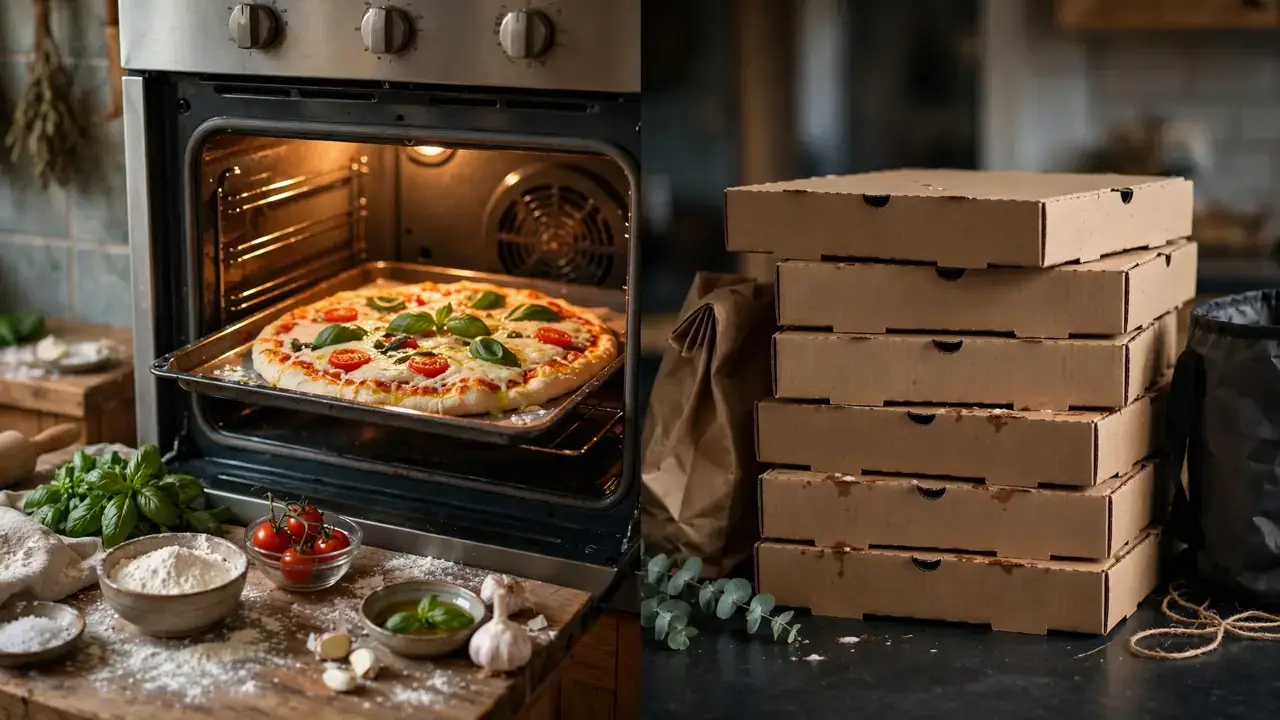
Homemade versus ordered: the price gap is biggest on simple pizzas and smallest on fully loaded ones.
Delivery Apps vs Ordering Direct: The Hidden Markup
Ordering through a delivery app feels convenient, but it is the most expensive way to buy pizza. Apps typically take 15 to 30 percent commission from the restaurant, and many shops quietly raise their menu prices inside the app to cover it. The same large pizza can cost $16 on the shop website and $20 in the app, before the app adds its own service fee and delivery fee on top.
Then comes the tip, which the app calculates on the inflated total. A $20 pizza with $6 in fees and a 20 percent tip lands near $31 at your door. The identical pizza ordered direct for carryout might have been $16. If delivery matters to you, order through the restaurant own website or phone line. You will usually pay less and the shop keeps more of it.
The Costco Factor
No price discussion is complete without Costco. Their food court sells an 18 inch pizza for around $10 to $11, which destroys every value calculation above. At roughly 254 square inches, that is about 4 cents per square inch, less than half the rate of a normal pizzeria large.
The catches are real though. You need a membership, topping choices are limited to a few classics, and you have to go get it yourself. For feeding a huge crowd on a budget, nothing else comes close. This is why costco pizza calculator is such a popular search: people are doing the math and realizing the warehouse wins.
6 Ways to Pay Less for Pizza
- Choose carryout over delivery. You skip the delivery fee and the driver tip, which together often add $7 to $10 to an order.
- Order on deal days. Many chains run half price or buy one get one deals on Tuesdays, and local shops often have a slow night special.
- Use the shop app. Chains put their best coupons in their own apps, not on delivery platforms that take a commission.
- Order bigger sizes. As the value math showed, a 16 inch pizza beats two 12 inch pizzas on price per bite almost every time.
- Go easy on premium toppings. Each specialty topping adds $2 to $3. Two well chosen toppings beat five expensive ones.
- Reheat leftovers properly. A pizza stone or a skillet with a lid brings slices back to life. Pizza you actually eat is always cheaper than pizza you throw away.
Pizza Price FAQs
What is a good price for a large pizza?
Between $13 and $18 is the typical United States range for a 14 inch cheese or pepperoni pizza from a local shop. Chain deals can drop it under $10, and big city prices can push past $20.
Why is pizza so expensive now?
Labor costs, cheese prices and delivery app commissions have all risen. A pizza that cost $10 five years ago now costs $13 to $15 in many cities, even though the recipe never changed.
Is it cheaper to make pizza or buy it?
Homemade is much cheaper for simple pizzas, about $3 to $5 versus $12 to $15 ordered. For fully loaded pizzas the gap shrinks to a few dollars, and your time becomes the deciding factor.
How much should 10 pizzas cost for a party?
Ten large pizzas at $15 each is $150 before tax and tip. Ask about bulk discounts, because many shops cut 10 percent or more on orders over 5 pizzas.
Does pizza size affect value?
Yes, strongly. Larger pizzas almost always cost less per square inch. A 16 inch pizza typically beats a 14 inch on value, which beats a 12 inch. Never judge by the sticker price alone.
What does pizza rate mean?
It simply means the price list. Every shop sets its own pizza rate based on size, toppings and location, which is why the same pizza can cost $12 in one place and $22 in another.
How much should I tip for pizza delivery?
Fifteen to twenty percent of the food total is the standard, with a minimum of $3 to $5. Bad weather or a long distance deserves more. Remember that app service fees are not tips and do not go to the driver.
Are pizza coupons actually worth it?
Yes, when they come from the shop itself. Buy one get one deals and half price days can cut your cost nearly in half. Coupons inside delivery apps are weaker, because the underlying prices are already marked up.
Know your pizza number
Enter your party size, pizza size and local prices for an instant cost breakdown.
Open the Pizza CalculatorPrices in this guide are typical United States ranges and change with location and time. This guide is for general planning and is not financial advice.