McDonald's Macros: Protein, Carbs and Fat in Every Popular Item
The full macros table for the McDonald's menu, the highest protein orders, lowest carb ways to order, and ready made orders for every goal.
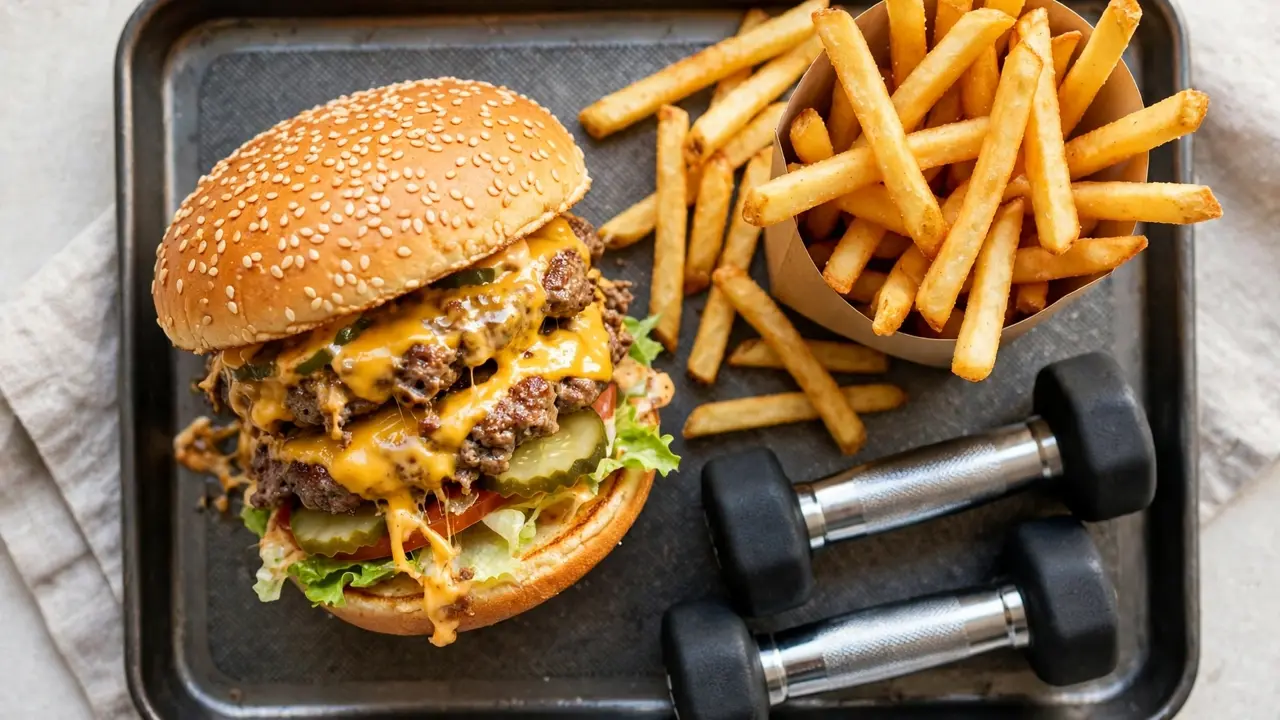
Yes, McDonald's can fit your macros, if you know which items to pick. Here are all the numbers.
You track your food all week, hit your protein target like a professional, and then Friday night happens. Someone suggests McDonald's and suddenly you are Googling mcdonald's macros in the drive thru line, hoping your diet survives the golden arches.
Good news: it can, if you know the numbers. This guide gives you the protein, carbs and fat for every popular McDonald's item, ranks the highest protein orders, shows the lowest carb ways to eat there, and builds ready made orders for bulking, cutting and balanced days. For any custom combination, our free McDonald’s nutrition calculator adds up your exact meal in seconds.
What Macros Are, and Why McDonald's Is Tricky to Track
Macros is short for macronutrients: protein, carbohydrates and fat. Protein builds and repairs muscle at 4 calories per gram. Carbs fuel training at 4 calories per gram. Fat supports hormones and flavor at 9 calories per gram, which is why fatty items get calorific so fast.
McDonald's is tricky because the same item name can hide very different macros. A McDouble and a Double Quarter Pounder are both double burgers, but one has 400 calories and 22 grams of protein while the other has 740 calories and 48 grams of protein. Sauces, cheese and buns quietly move the numbers, which is exactly why guessing fails and tables win.
Macro basics: protein 4 calories per gram, carbs 4 calories per gram, fat 9 calories per gram. Know those three numbers and every label makes sense.
McDonald's Macros Table: Every Popular Item
These are the published United States values, rounded to the nearest gram. Menus and recipes change by country and over time, so treat them as very close estimates and check the calculator for your exact build.
| Item | Calories | Protein | Carbs | Fat |
|---|---|---|---|---|
| Big Mac | 590 | 25 g | 46 g | 34 g |
| Quarter Pounder with Cheese | 520 | 30 g | 42 g | 26 g |
| Double Quarter Pounder with Cheese | 740 | 48 g | 43 g | 42 g |
| Double Cheeseburger | 450 | 25 g | 34 g | 24 g |
| McDouble | 400 | 22 g | 33 g | 20 g |
| Cheeseburger | 300 | 15 g | 32 g | 12 g |
| Hamburger | 250 | 12 g | 30 g | 9 g |
| McChicken | 400 | 14 g | 39 g | 21 g |
| Crispy Chicken Sandwich | 470 | 27 g | 45 g | 20 g |
| Filet-O-Fish | 390 | 16 g | 39 g | 19 g |
| Chicken McNuggets, 10 piece | 410 | 24 g | 26 g | 24 g |
| Chicken McNuggets, 6 piece | 250 | 14 g | 15 g | 15 g |
| Egg McMuffin | 310 | 17 g | 30 g | 13 g |
| Sausage McMuffin with Egg | 480 | 20 g | 30 g | 31 g |
| French Fries, medium | 320 | 5 g | 43 g | 15 g |
| French Fries, large | 480 | 7 g | 65 g | 23 g |
Two patterns jump out of the table. First, the bun and fries are where the carbs live: a large fries alone carries 65 grams of carbs, more than most burgers. Second, the beef patties are protein dense for their price, which is why the next section looks the way it does.
The Highest Protein Orders at McDonald's
The Double Quarter Pounder with Cheese is the protein king at 48 grams. Nothing else on the standard menu comes close. It also carries 740 calories and 42 grams of fat, so it fits a bulking day or a post workout meal far better than a cutting day.
The sweet spot for most lifters is the regular Quarter Pounder with Cheese: 30 grams of protein for 520 calories, a much better protein to calorie ratio. The Crispy Chicken Sandwich follows at 27 grams of protein for 470 calories, and the Big Mac and Double Cheeseburger tie at 25 grams each.
For pure protein efficiency, 10 piece McNuggets deserve respect: 24 grams of protein for 410 calories, with fewer carbs than any burger because there is no bun. Pair them with water or a zero sugar drink and you have a drive thru meal that genuinely fits a high protein day.
The bun and fries are where the carbs live. The patties are where the protein lives.
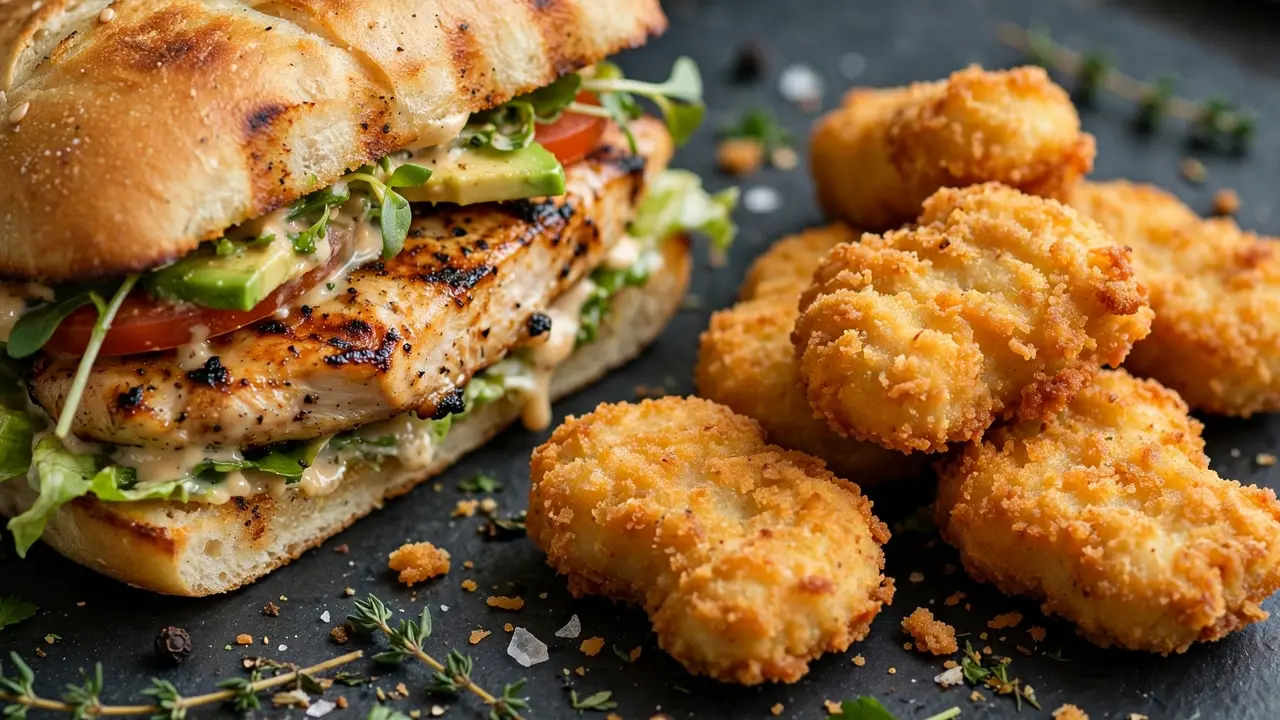
Chicken items are the macro friendly core of the menu: high protein, moderate calories, no surprises.
The Lowest Carb Ways to Order
Carbs at McDonald's come from three places: the bun (about 28 to 30 grams), the fries (43 to 65 grams), and sugary drinks. Remove those and the menu gets surprisingly workable for low carb and keto style eating.
Order any burger bunless, in a lettuce wrap or a bowl. A bunless Quarter Pounder with Cheese drops from 42 grams of carbs to roughly 4 grams, mostly from the cheese and pickles. A bunless Double Quarter Pounder lands near 5 grams of carbs with 48 grams of protein, which is a legitimate keto meal.
Skip the fries and choose a side salad or nothing. Choose water, unsweetened tea or black coffee over soda, because a large soda adds about 70 grams of carbs that nobody counts. Breakfast works too: an Egg McMuffin without the muffin has about 3 grams of carbs and 17 grams of protein.
Best McDonald's Orders by Goal
For bulking: a Double Quarter Pounder with Cheese, large fries and a chocolate shake if your stomach agrees. That is roughly 1,900 calories and over 60 grams of protein in one tray, which is exactly what a hard gainer needs.
For cutting: a Quarter Pounder with Cheese with no fries, or 10 piece McNuggets with a side salad and water. Both land near 520 calories or less with 24 to 30 grams of protein, keeping you full without blowing the deficit.
For low carb: a bunless Double Quarter Pounder with Cheese and a side salad, about 750 calories, 48 grams of protein and roughly 5 grams of carbs. Ask for it in a bowl and eat it with a fork like a very committed person.
For a balanced day: an Egg McMuffin at breakfast is the quiet champion, 310 calories, 17 grams of protein and moderate everything. At lunch, a Crispy Chicken Sandwich without fries keeps the day on track at 470 calories.
If you want even leaner protein numbers, compare these with the Chipotle menu in our Chipotle nutrition calculator, where a chicken bowl reaches 32 grams of protein for 180 calories of chicken alone. Different restaurants win different goals, and knowing both menus makes flexible dieting much easier.
McDonald's Breakfast Macros
Breakfast splits into two camps. The egg based items are genuinely solid: solid protein, moderate carbs, sane calories. The pancake and platter items are calorie bombs wearing a morning smile.
The Egg McMuffin remains the best all rounder at 310 calories and 17 grams of protein. The Sausage Burrito matches it on calories at 310, with 13 grams of protein and 25 grams of carbs, and it is easy to eat two without noticing. Hash Browns are a small add on at about 140 calories and 15 grams of carbs.
Watch the Big Breakfast platter: about 760 calories, 26 grams of protein, 48 grams of carbs and 50 grams of fat. It is basically a bulking meal disguised as a normal breakfast. Hotcakes land near 580 calories with about 101 grams of carbs, which is more carbs than a large fries. If you train in the morning, that is fuel. If you sit at a desk, it is a nap with syrup.
Drinks and Desserts: The Hidden Macros
The meal is rarely the problem. The drink and dessert riding along with it are. A large Coca Cola adds about 290 calories and 77 grams of carbs to your tray, more carbs than the burger itself carries. Nobody logs it, because nobody thinks of a drink as food.
An Oreo McFlurry adds about 510 calories, 12 grams of protein, 80 grams of carbs and 16 grams of fat. A simple vanilla cone is much gentler at about 200 calories and 32 grams of carbs. The pattern is always the same: creamy and blended desserts cost three to five times what a simple one costs.
The fix is boring and effective. Pair meals with water, unsweetened iced tea or black coffee, all effectively zero macros. Save the shakes and sodas for days when the calories are already planned, and your burger math stays honest.
Customization Math: Buns, Cheese and Sauces
Small changes move macros more than people expect. Removing the bun saves about 150 calories and 28 grams of carbs on most burgers. Skipping one slice of cheese saves about 50 to 70 calories and 5 grams of fat. Asking for no mayo or no Big Mac sauce saves roughly 90 to 100 calories per sandwich, almost all of it fat.
Adding is just as powerful. An extra beef patty on a Quarter Pounder adds about 14 grams of protein and 160 calories. An extra egg at breakfast adds 6 grams of protein for about 70 calories, one of the best protein bargains on the entire menu.
This is where a calculator beats a table. Tables cover standard items, but your order is never standard. Add your items, apply your changes, and the McDonald’s nutrition calculator totals the real meal you are about to eat.
McDonald's Macros FAQs
What has the most protein at McDonald's?
The Double Quarter Pounder with Cheese, at 48 grams of protein. The regular Quarter Pounder with Cheese is second at 30 grams, with a better protein to calorie ratio.
How many carbs are in a Big Mac?
46 grams of carbs, along with 590 calories, 25 grams of protein and 34 grams of fat. Ordering it without the middle bun saves about 8 grams of carbs.
Can you eat McDonald's and still hit your macros?
Yes. Flexible dieting is built on totals, not forbidden foods. A 520 calorie Quarter Pounder with Cheese fits most macro plans as long as the rest of the day is planned around it.
What is the lowest calorie high protein order?
Ten piece McNuggets: 410 calories and 24 grams of protein. A bunless Quarter Pounder also works well at roughly 370 calories and 30 grams of protein.
Are McDonald's published macros accurate?
Close, with normal cooking variation. Independent testing generally finds fast food items within about 10 percent of published values, so track them honestly and do not stress about single grams.
How do I calculate macros for a custom order?
Add each item separately, then adjust for changes: minus about 150 calories for no bun, minus 50 to 70 per cheese slice skipped, plus 160 for an extra patty. Or use the nutrition calculator, which does all of it instantly.
Is McDonald's or homemade better for macros?
Homemade gives you full control, but convenience wins some days. The protein content is comparable; the main difference is sodium and cooking fat, which you can reduce at home.
How much protein is in a McDonald's breakfast?
The Egg McMuffin has 17 grams of protein for 310 calories, the best ratio on the breakfast menu. The Sausage McMuffin with Egg has 20 grams but costs 480 calories and 31 grams of fat.
Build your exact meal
Add your items and customizations for instant calories, protein, carbs and fat.
Open the McDonald’s Nutrition CalculatorNutrition values are McDonald’s published United States figures, rounded, and vary by country and preparation. This guide is for general information and is not medical or dietary advice.